Craft + Commerce 2026 Recap: New Kit Features, Marketing Takeaways, & Keynote Highlights
This past June, I went to my first Kit Craft + Commerce conference in Boise! As a fellow Idaho resident, Craft + Commerce has been on my radar for a while, and this year, the dates finally worked out for me, and I’m so glad I went.
There were new Kit feature announcements, practical and tactical workshops, lots of incredible keynote speakers, and so many super interesting conversations with people building different kinds of businesses.
I came home with pages of notes, several new tools I’ve already started using with clients, and approximately 47 more things I want to test.
Here’s a recap of what I learned, what Kit announced, and how I’m already starting to use some of the new features.
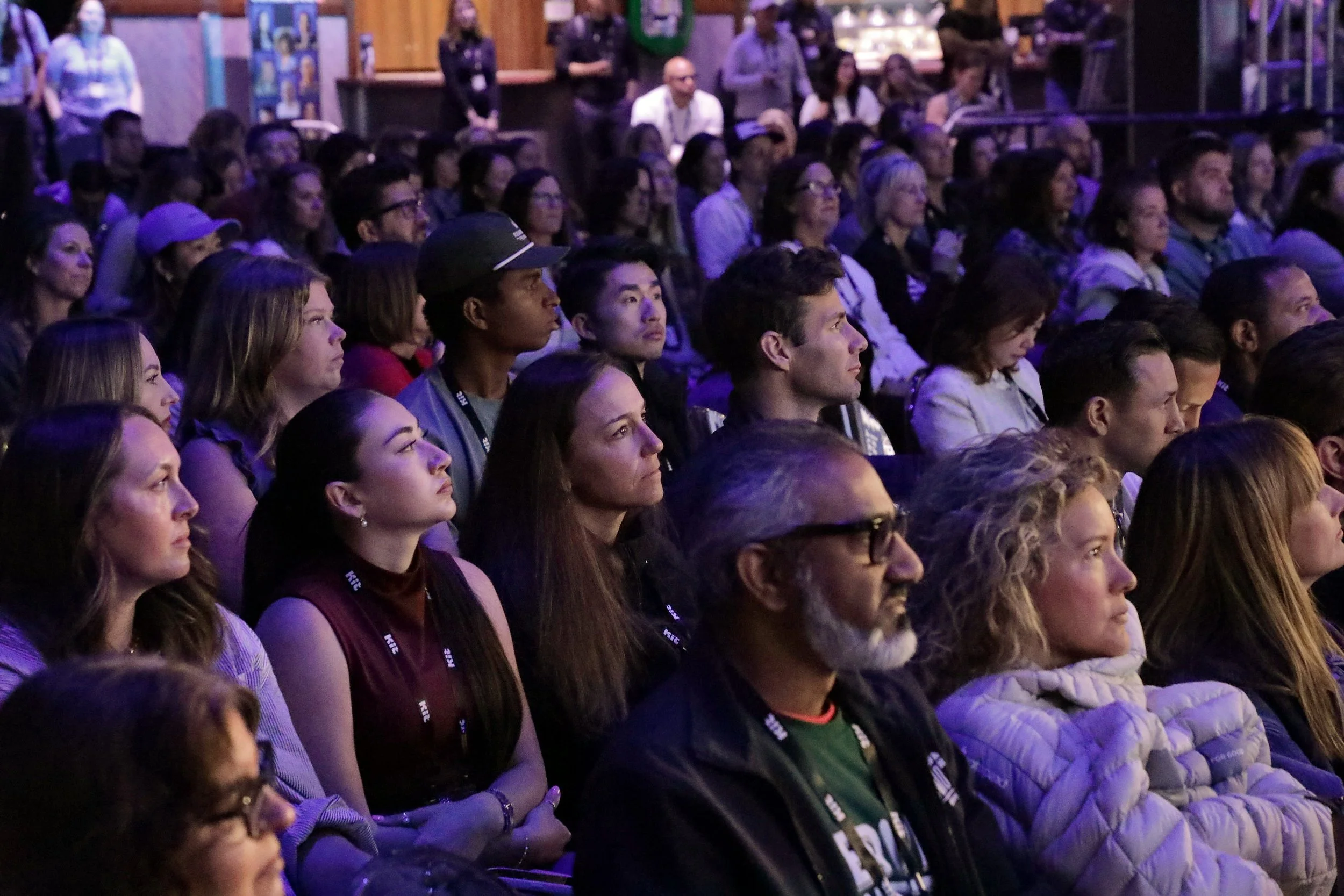
Craft + Commerce Day One: Lots of Conversations!
The conference started with a welcome party, where I was immediately excited to see tons of gluten-free (and dairy-free!) options on the giant charcuterie boards. It’s the little things that help people feel welcomed! I had a great time meeting The Breakfast Club Online women in person, and chatting with people working on really interesting projects.
After the welcome party, I joined one of the hosted dinners organized through From Boise. You sign up, and they pair you with five other random people attending the conference (they do this monthly in Boise, too!). Definitely out of my comfort zone, but it was so much fun.
We had a high-ticket sales expert, a CPA, a functional medicine fertility specialist, a corporate software teacher and trainer, and me around our table. We chatted about how our businesses have changed over the years, what we think will happen with AI, and all kinds of general business-owner “stuff.”
It’s always so fascinating to me how people create their own paths, combine completely different skills and experiences, and figure out ways to make money online.
My biggest takeaways from the first night were all about the conversations happening around the conference:
First: in-person events are doing incredibly well. I’ve already seen this with some of my clients and their in-person workshops, but it really feels like people are craving more opportunities to be in the same room together.
Second: being willing (and open) to start a conversation goes such a long way. Almost everyone I talked to could trace an important client, opportunity, collaboration, or even the beginning of their business back to one conversation.
And third: having an online presence really does matter. This is something I’ve struggled with lately in my own business. But so many of our conversations came back to the importance of being searchable and having somewhere people can go to learn more about you after meeting you.
I took exactly zero photos that first night (haha, whoops!), but many excellent conversations were had!
Craft + Commerce Day Two: New Kit Features, Systems, and Some Big Ideas
Day two started with Kit founder Nathan Barry and Kit CEO Katie Swett Miller sharing what’s new with the platform. I already use Kit with most of my clients and for my own newsletter, and there are SO many amazing new features!
The theme connecting the announcements was that your email list should be treated like a real business asset instead of just a place where you occasionally send newsletters. (If you know me, you know I’ve been saying this for a long time!)
Kit’s new releases are designed to give creators more information about the humans on their list, connect more of their audience data and insights in one place, and help them actually act on that information. As someone who’s all about using tech to create more human experiences, this all resonated so much!
Some of these features are already making a difference in how I work with clients. Others are still on my list to test. Here’s the rundown:
→ Subscriber Signals
Subscriber Signals was one of the announcements I was most excited about.
Most email platforms give you information about how someone interacts with your emails. You can see whether they open, click, purchase, or stop engaging.
Subscriber Signals adds more context about who those people actually are. The human on the other side of the screen, if you will.
It layers professional and demographic context, social platform information, purchase history, and engagement data into a much more comprehensive subscriber profile. So for one of my course creator clients, for example, we can see someone’s purchase history more clearly, along with where they show up most online, and where they’re based.
Important to note: Kit explains that the information comes from professional third-party data providers. Subscribers aren’t being asked to provide Kit with additional information, and Kit does not sell their data.
I attended a workshop with Frances and Steph where we explored some of the ways Subscriber Signals can be used, including:
Finding your most engaged subscribers
Identifying potential collaborators and affiliates
Searching subscriber bios (for example for “podcasters”)
Finding people based in a particular location
Understanding whether subscribers are freelancers, corporate employees, creators, or working in another specific category
Surfacing leads who might otherwise be buried inside a large email list
I’ve already used Subscriber Signals for a client to identify podcasters in his area who look like they are a good fit for him to connect with as a potential guest on their shows.
I’ve also been using it to connect with new subscribers individually and in a personalized way while they’re highly engaged.
All of this means having more context about our people so we can start more personalized conversations!
→ Engagement Analytics
Kit also released more detailed Engagement Analytics for Pro accounts.
Open rates and click rates are useful, but they don’t tell you everything about how your email list is performing. The new engagement analytics include information about subscriber retention, where your subscribers are coming from, and overall subscriber lifecycle health through the entire audience journey.
I’ve already been using the source attribution information to look at where my clients’ subscribers are actually coming from - it’s giving us much better information when we’re deciding which partnerships, lead magnets, content platforms, or promotions are bringing in relevant subscribers.
→ Kit MCP
Kit’s MCP is now officially out of beta and available to all paid Kit users.
MCP stands for Model Context Protocol. In a nutshell, it allows you to securely connect your Kit account to AI tools like Claude, ChatGPT, or Microsoft Copilot.
This gives the AI tool access to the relevant information inside your Kit account, rather than requiring you to manually export spreadsheets, paste in data, or explain how everything is organized each time.
I’ve been testing the Kit MCP to create more personalized subscriber segments and sort people based on which courses they have purchased for one of my clients. I have been doing some of this manually for years - exporting lists, comparing spreadsheets, importing with new tags, and organizing into segments. SO much easier now!
Being able to ask questions about subscriber data and then act on the answers right away opens up so many more options for personalization.
This is the kind of AI use that’s super interesting to me - using technology to create more relevant and human experiences for the people on the other side of the screen.
→ The New Landing Page Editor
LANDING PAGES ARE FINALLY EDITABLE! Yayyyyy!
This was another announcement I was very excited about.
Kit’s new landing page editor is currently in public beta and available on all plans. It includes a way (WAY) more flexible editor and updated templates, giving us all much more control over how our landing pages look and function.
I’ll be using these for client newsletter signup pages, workshop registration pages, lead magnets, and other opt-in forms.
A signup page is often someone’s first interaction with your email ecosystem, so having more control over that experience and making sure it’s all on-brand is a very welcome update.
→ Abandoned Checkout
This is one I haven’t tested with clients yet - Kit’s new abandoned checkout tools allow you to personalize email content based on someone’s real-time purchasing behavior. The first integrations are available for Shopify, Fourthwall, and Wix.
That means someone who started checking out but didn’t complete a purchase gets different messaging from someone who never visited the checkout page at all. If you’ve used other e-comm platforms or online course platforms in the past, you’ve probably used their native abandoned cart emails instead.
I can see this feature being useful for launches, merchandise sales, workshops, and digital products.
It’s available on Kit’s paid plans.
→ Newsletter Sponsorships
Kit also launched built-in newsletter sponsorship tools. The goal is to help creators find, manage, and earn revenue from brand sponsorships without needing to piece together a completely separate process.
This includes tools for sponsorship reporting and making it easier to share useful audience information with potential brand partners. The reports look awesome!
I haven’t used this yet because sponsorships aren’t currently part of my own newsletter or any of my clients’ newsletters, but I’m interested to see how it works for creators who want to build sponsorship revenue without compromising the trust they have with their audiences.
Newsletter Sponsorships are available on paid plans.
→ New Kit Apps and Integrations
Kit also announced several additions to its Apps:
SlickText for SMS: Creators can add text messaging to Kit automations for time-sensitive launches, reminders, or other important updates.
HubSpot CRM: Pro users can set up a two-way sync between HubSpot and Kit, allowing subscriber activity to trigger actions inside a CRM and vice versa.
Patreon Memberships: Patreon member data, including tier, membership status, and lifetime support, can be synced into Kit and used in automations or email content.
Luma and Eventbrite: Event registration data can flow directly into Kit, making it easier to send event reminders, post-event follow-ups, and other relevant sequences.
I haven’t tested these yet, but the event integrations are especially interesting to me after having so many conversations about the growth of in-person events. They’ll make it much easier to connect an event experience to the rest of someone’s relationship with a business instead of treating it as a completely separate system.
Building Better Automations
One of my favorite workshops was with Shiv and Preston, who walked through a “waterfall” approach to Kit automations.
Naturally, I get very excited about systems “stuff” and was so stoked to meet these guys in person!
One of my biggest “technical” notes from the workshop was to think about events inside automations like magnets that attract people to that exact point in your automation as soon as the event happens.
I also loved Preston’s demonstration of chaining automations together and using tags to move subscribers into the next relevant automation.
Conditional nodes work with tags rather than purchases themselves, so a big practical takeaway was basically:
→ Tag everyone.
And make sure your tag naming structure is consistent enough that you can still understand it six months from now. We’ve all been there with lists and lists of tags that made sense at the time but might not anymore.
The bigger idea was to think about the ideal path you want someone to take through your business.
When someone branches off that path, your automations can help guide them back toward the next most relevant step.
I already build marketing systems this way for clients, but the workshop gave me several ideas for making those systems more connected and intentional inside Kit.
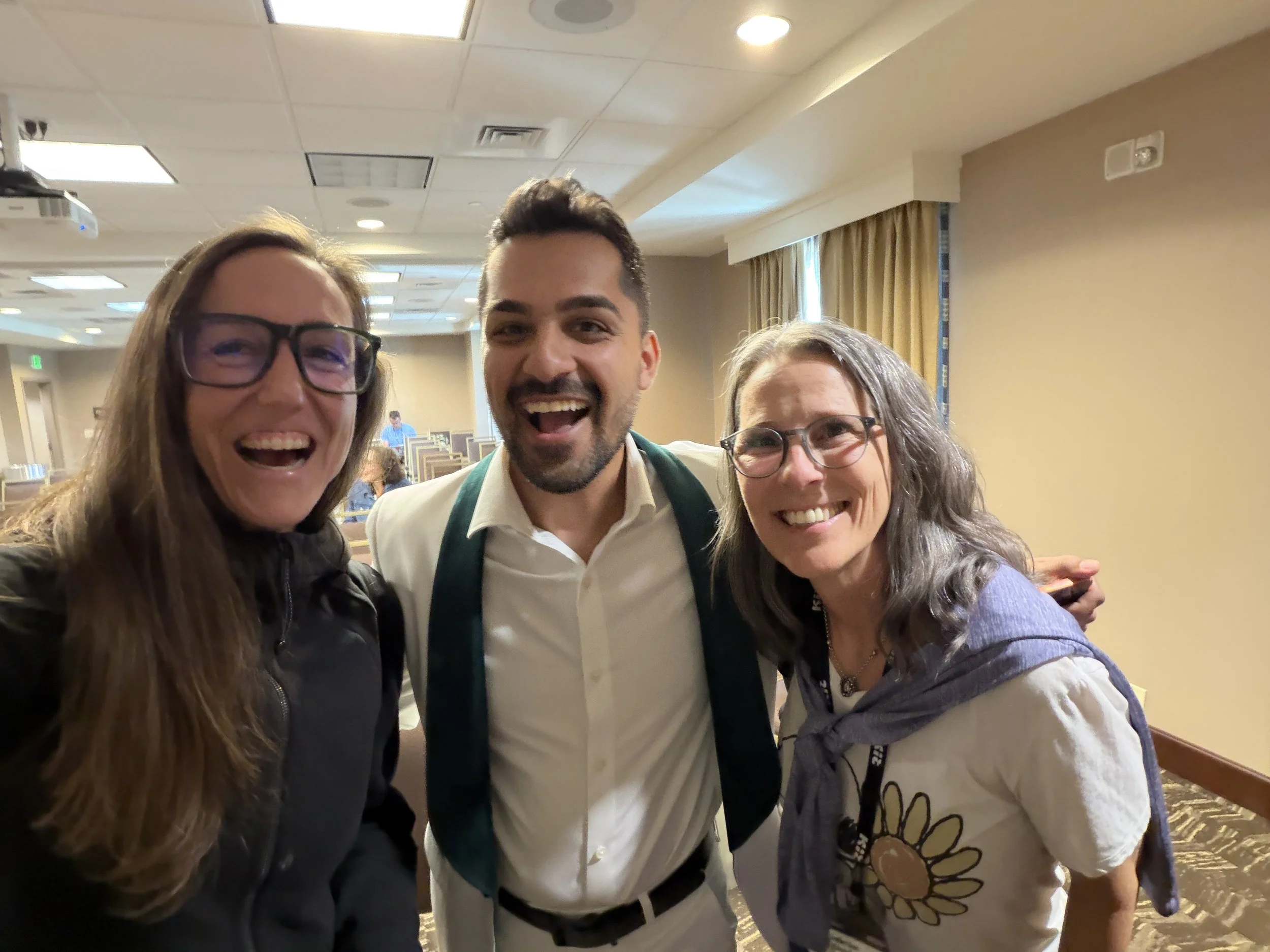
Yay for meeting Shiv in person!
Simon Alexander Ong: Courage, Creativity, and Possibility
Simon Alexander Ong spoke about courage, energy, creativity, curiosity, and creating more opportunities for luck.
A few of my notes from his keynote:
Not all risk-takers will be winners, but all winners are risk-takers.
Be creative, be curious, and act boldly.
The energy and presence we bring to other people matter.
Some of your favorite days haven’t happened yet.
He also talked about increasing the “surface area” available for luck by taking action, meeting people, sharing ideas, and creating more opportunities for something unexpected to happen. This felt especially relevant at a conference where so many people were sharing stories about opportunities that began through one conversation or connection.
I also loved that he brought the ideas of “pronoia” ( the belief that life is working out in your favor, and that the universe is conspiring to make things happen for you) and “sonder” (everyone around you is living a life as vivid and complex as your own) into his keynote.
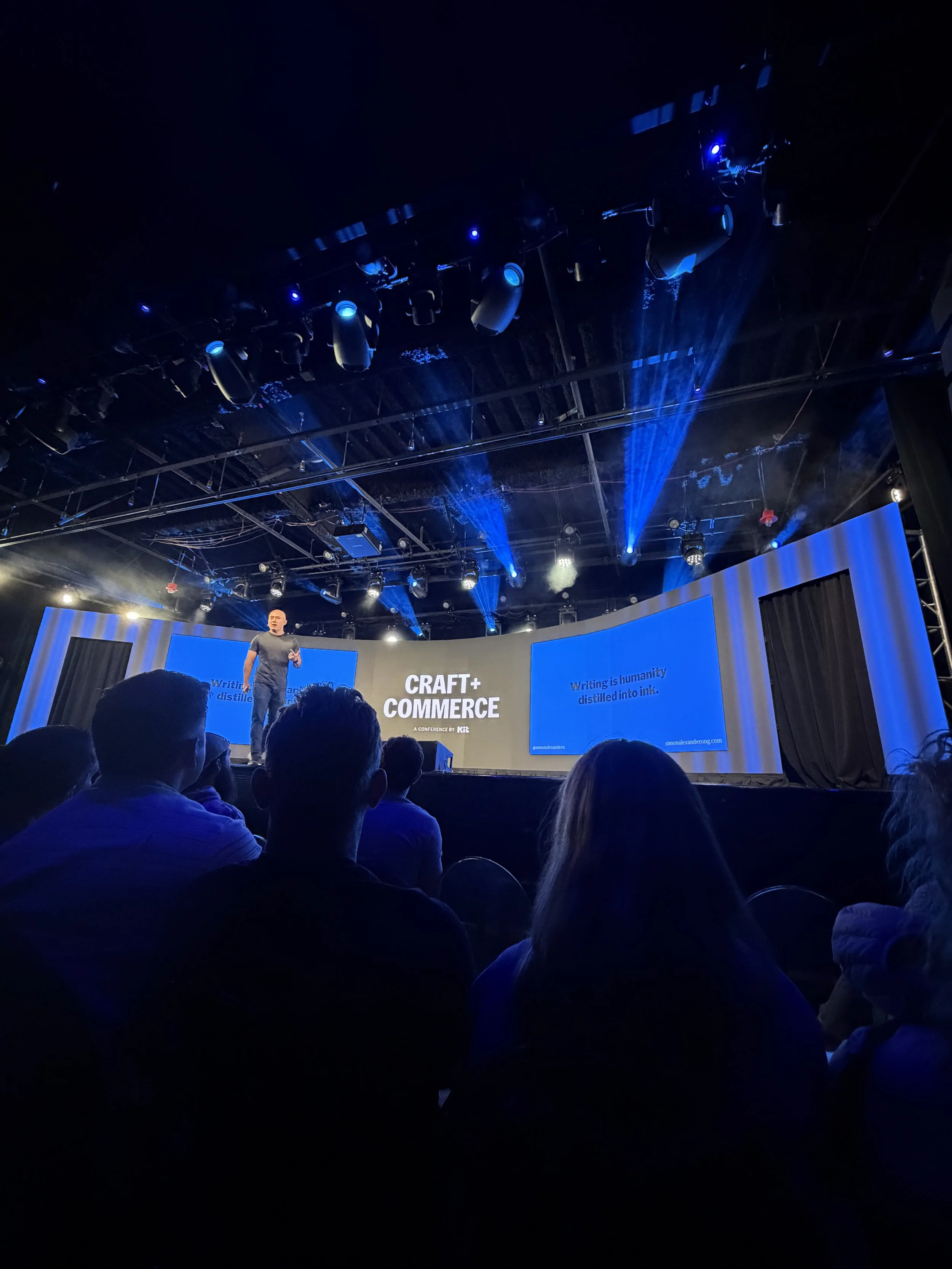
Simon Alexander Ong discussing writing during his keynote
Understanding the Real Humans Behind the Data
Barrett Brooks gave an incredible keynote. There was so much about navigating challenges, grief, communication, growth… I was totally engaged in what he was saying and didn’t take many notes!
Barrett also reminded us to “train like a professional athlete,” while also acknowledging that we are real humans with real limits.
That combination really resonated with me. We can create systems, build habits, improve our skills, and take our work seriously without pretending we’re machines.
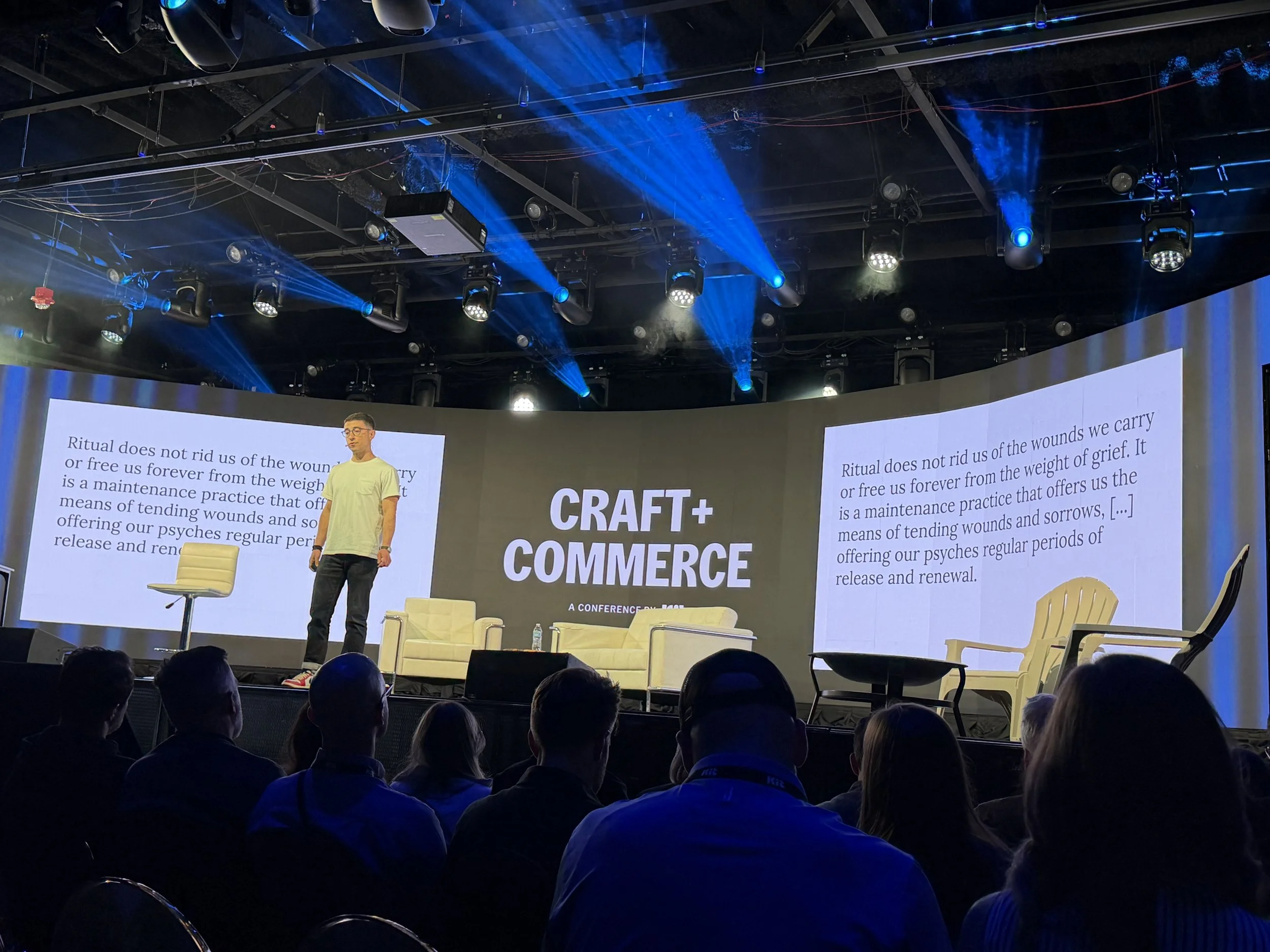
Barrett Brooks discussing ritual during his keynote at Craft + Commerce
Gabby Beckford also spoke about defining wealth more broadly. She described being rich in adventure, experiences, friendships, and other parts of life that don’t always appear on a financial statement.
One of her other points connected to a theme that kept showing up throughout the conference:
It’s not who you know or who knows you. It’s who knows what you want.
In other words, people can’t connect you to the right opportunity if they don’t know what you’re trying to build, find, or do next.
James Clear and Nathan Barry: High Signal, Low Noise
I came away from the conversation between James Clear and Nathan Barry with pages and pages of notes.
One idea that stood out was the importance of making every part of your work as excellent as possible. If you’re writing a book for example, that means paying attention to the book as a whole, each chapter, each opening paragraph, and even each opening sentence.
They also discussed how difficult it is to convince people that they have an entirely new problem. It’s often way more effective to connect an idea, offer, or product to a desire people already have.
A few more ideas from their chat that I’m still thinking about:
Create work that is high signal and low noise.
Spend more time creating things with extreme value.
Choose a few platforms and become excellent there rather than trying to be everywhere.
Play to your own strengths and style.
Make content creation about craft and taste.
People need reminders. Staying in touch is part of serving them.
Start by deciding how you want your days to look.
Do something today that could still matter ten years from now.
James also shared three habits that he tries to make space for daily:
Reflection and review, so he knows he is working on the highest and best use of his time.
Working out or doing something that helps him reset.
Reading and improving his consumption habits.
He explained that our thoughts are downstream of what we consume. That one has stayed with me.
We spend so much time thinking about what we want to create, but the quality of what we create is connected to the quality of what we read, watch, listen to, and pay attention to.
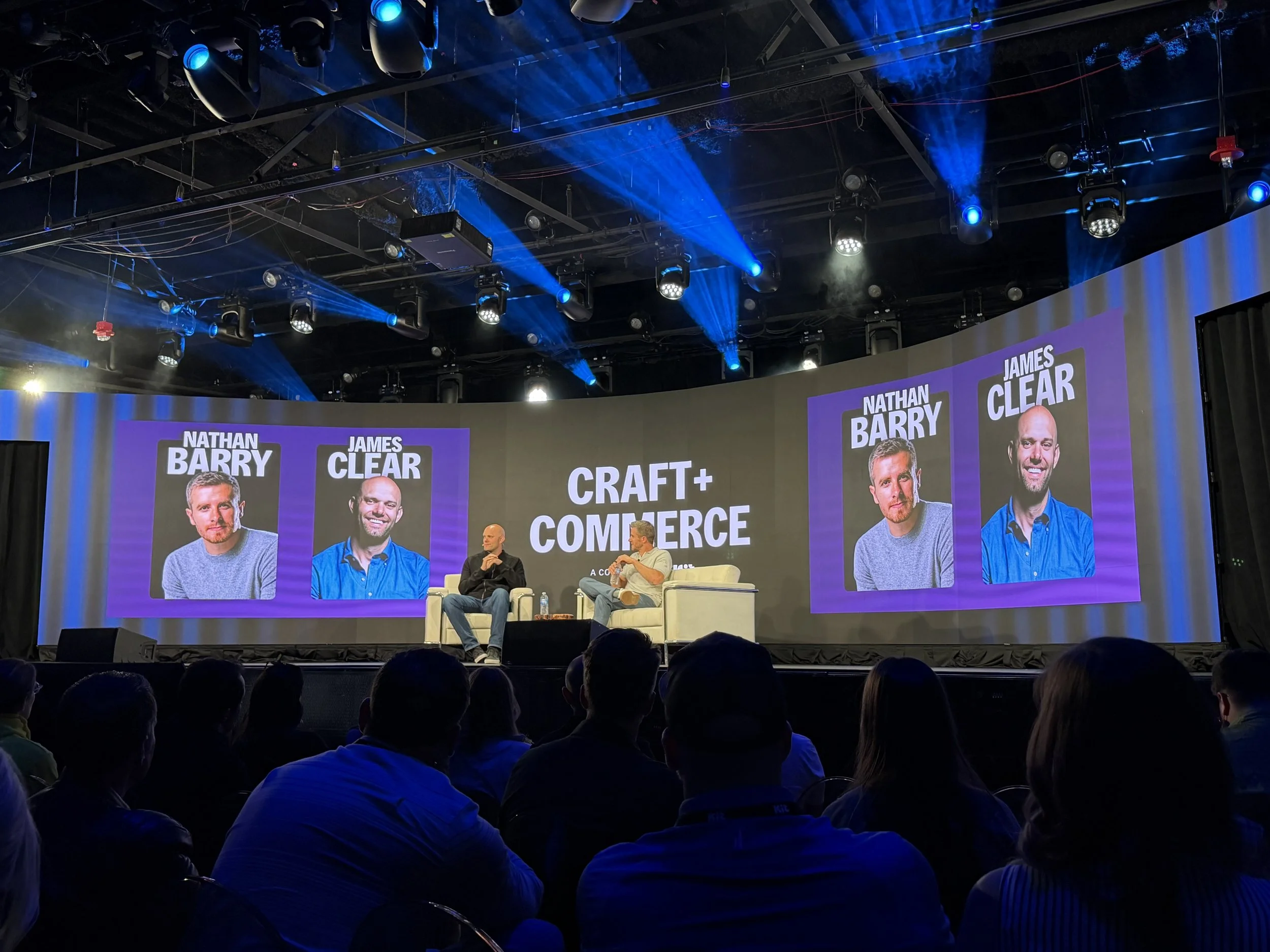
Nathan Barry and James Clear. Not pictured: me scribbling furiously in my notebook.
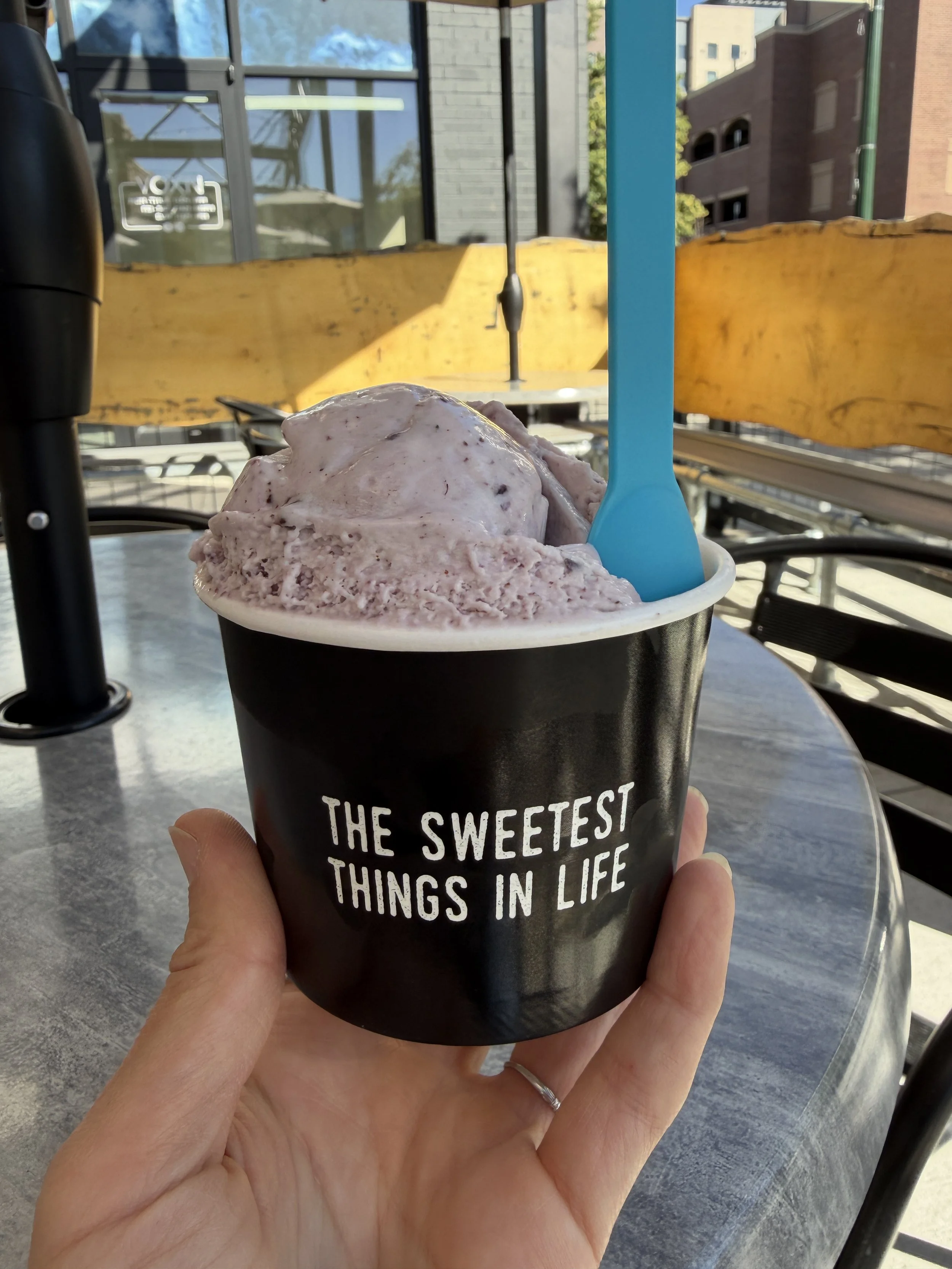
I ended the evening with dairy-free ice cream from The Stil. Yum!
Craft + Commerce Day Three: Process, Community, and Navigating Storms
Day three started with an early-morning Kit Affiliate coffee at Sherose. Lots of great conversations, and it was so fun to meet other Kit Affiliates!
From there, the keynotes I attended on day 3 focused heavily on showing your work, building community, and navigating difficult seasons.
Gannon Meyer: Show How You Think
Gannon Meyer encouraged us to show more of our process and problem-solving approach.
Instead of just sharing polished finished work, we can create content around questions like:
“If I were doing this, here’s how I would approach it.”
“Here’s how I would set this up.”
“This is what I would do if you hired me for this.”
This fits so well with the direction I’ve been thinking about for my own educational content.
The valuable part of sharing expertise isn’t always the final answer. It’s the process… how someone notices the problem, translates what’s happening, connects it to the bigger picture, and decides what to do next and how to apply the information.
I think in systems a lot, and love to see the big picture before I break it down into the details, so Gannon’s talk was really inspiring.
Courtney Spritzer: Give First
Courtney Spritzer talked about the importance of relationships, generosity, collaboration, consistency, and reciprocity.
A few of her practical suggestions included asking people what introductions you could make for them, finding out what they need help with, responding to messages, and showing up consistently.
Her version of the networking conversation was that it really is about who you know, and that the community you surround yourself with can create the fastest path to growth.
Across the conference, I heard three different versions of this idea:
It’s about who you know.
It’s not about who you know; it’s about who knows you.
It’s not about who you know or who knows you; it’s about who knows what you want.
I don’t think there’s one correct version here! Ideally, we should probably be thinking about all three.
We need genuine relationships, and we need to build recognizability. And we need to let people know what we’re working toward so they can think of us when relevant opportunities pop up.
Jay Papasan: Navigating Storms
Jay Papasan’s keynote was about navigating storms in business and life, especially when life doesn’t give you a convenient pause button.
He talked about some of the things we hold onto during difficult seasons, including self-doubt, people pleasing, busyness, and taking too much ownership of the wrong things.
His framework for facing those seasons included:
Reframing the situation
Reclaiming your time
Refilling your cup
Recalibrating your standards
Re-engineering your village
Rebuilding the foundation
Reorienting your perspective
The two questions he suggested asking ourselves that stayed with me most were:
Six months from now, what do you want to remember about this season?
And:
What story will you tell about this season in the future when you’re helping someone else?
After navigating a few storms during the first half of 2026, those questions have been truly helpful to think about. They shift the focus away from simply trying to get through a difficult period and toward thinking about what you’re learning, what matters, and how the experience might eventually help someone else.
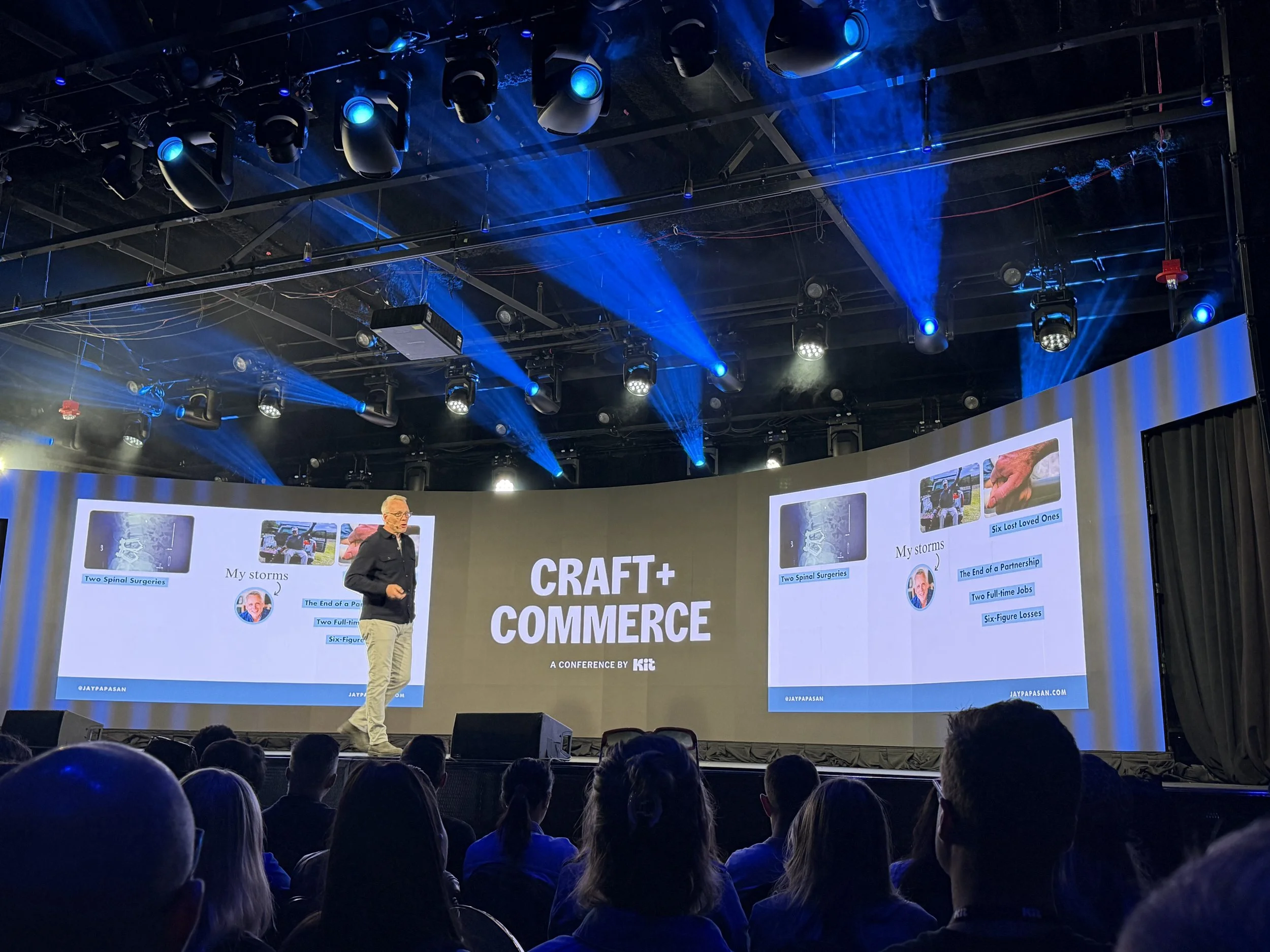
Jay Papasan talking about storms
What I’m Taking Away From Craft + Commerce 2026
I expected to come home with new ideas about email strategy, automations, and Kit features.
I definitely did!
I’m already using Subscriber Signals, Engagement Analytics, the new landing page tools, and Kit’s MCP in my client work, and I have several other features and integrations to explore. I love using Kit, and I’m so glad they’re focusing on the human side of email marketing and automations. I think this is increasingly important these days!
Many of my other biggest takeaways were about conversations, visibility, generosity, craft, community, and making sure the technology we use actually helps us understand and serve people better.
An email list is so valuable because it represents real people who have chosen to hear from you. The better we understand those humans on the other side of the screen, the more relevant and useful our communication can be.
That’s what makes these new Kit tools exciting to me! They can help us create smarter systems, more personalized experiences, and better human connections.
And that’s exactly the kind of marketing I want to keep building.
Explore Kit and start your free trial here.
Until next year, Craft + Commerce!
Craft + Commerce FAQs:
-
Craft + Commerce is Kit's annual conference for creators, marketers, writers, entrepreneurs, and online business owners. The conference combines keynote speakers, hands-on workshops, product announcements, networking events, and lots of opportunities to connect with other people building businesses online.
One of the things I appreciated most was that it wasn't just about email marketing or Kit itself. The sessions covered business strategy, creativity, content creation, community, habits, entrepreneurship, and so much more, making it really valuable even outside of the software announcements.
-
For me, absolutely.
The keynote speakers were awesome, but some of my favorite moments happened between sessions -meeting people over dinner, chatting after workshops, and hearing how other business owners are approaching similar challenges.
If you use Kit (or are considering it), there's obvious value in learning about the platform directly from the team. But even if you came away without trying a single new feature, the conversations and ideas alone made the trip worthwhile!
I'll definitely be back next year, and I'll plan to stay an extra day or two.
-
I think Craft + Commerce is a great fit for:
Creators and online educators
Authors and writers
Newsletter publishers
Small business owners
Marketers
Coaches and consultants
Anyone building an audience online
Even though many attendees use Kit, you definitely don't have to be a Kit customer to benefit from the conference.
If you're interested in growing an audience, building stronger marketing systems, or just spending a few days surrounded by thoughtful business owners, you'll find plenty of takeaways.
-
Kit introduced several major new features during the conference, including Subscriber Signals, Engagement Analytics, the public launch of Kit MCP, a completely redesigned landing page editor, Newsletter Sponsorships, Abandoned Checkout, and several new integrations for SMS, CRM, memberships, and events. Check out all of the new 2026 releases here!
I've already started using Subscriber Signals, Engagement Analytics, Kit MCP, and the new landing page editor with clients, and I'm excited to keep experimenting with the rest of the releases over the coming months.
-
Looking back a month later, my biggest takeaway was the reminder that great businesses are still built on relationships.
Throughout the conference, I kept hearing different versions of the same idea: conversations create opportunities. Whether it was meeting new people at dinner, learning from keynote speakers, or discovering new ways to personalize marketing with Kit's latest tools, everything came back to building stronger connections with real humans.
That combination of thoughtful technology and genuine relationships is exactly the kind of marketing I want to keep building!
*This blog post contains affiliate links to Kit. I may receive a commission if you sign up or make a purchase through my link, at no additional cost to you.